
Cooking-Line Exteriors
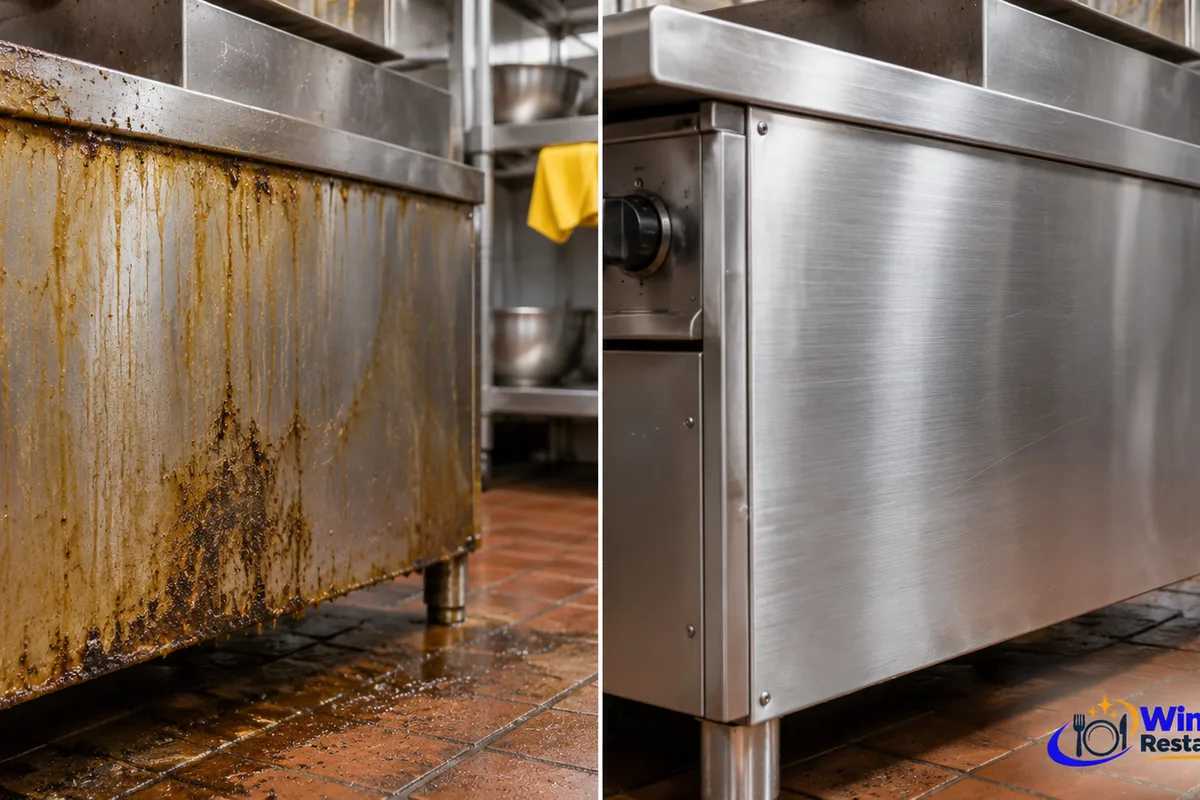
Accessible fronts, sides, legs, casters, and control-area surrounds can be degreased without flooding electrical or gas components.
Serving Winston-Salem, North Carolina & surrounding areas
Open 24/7
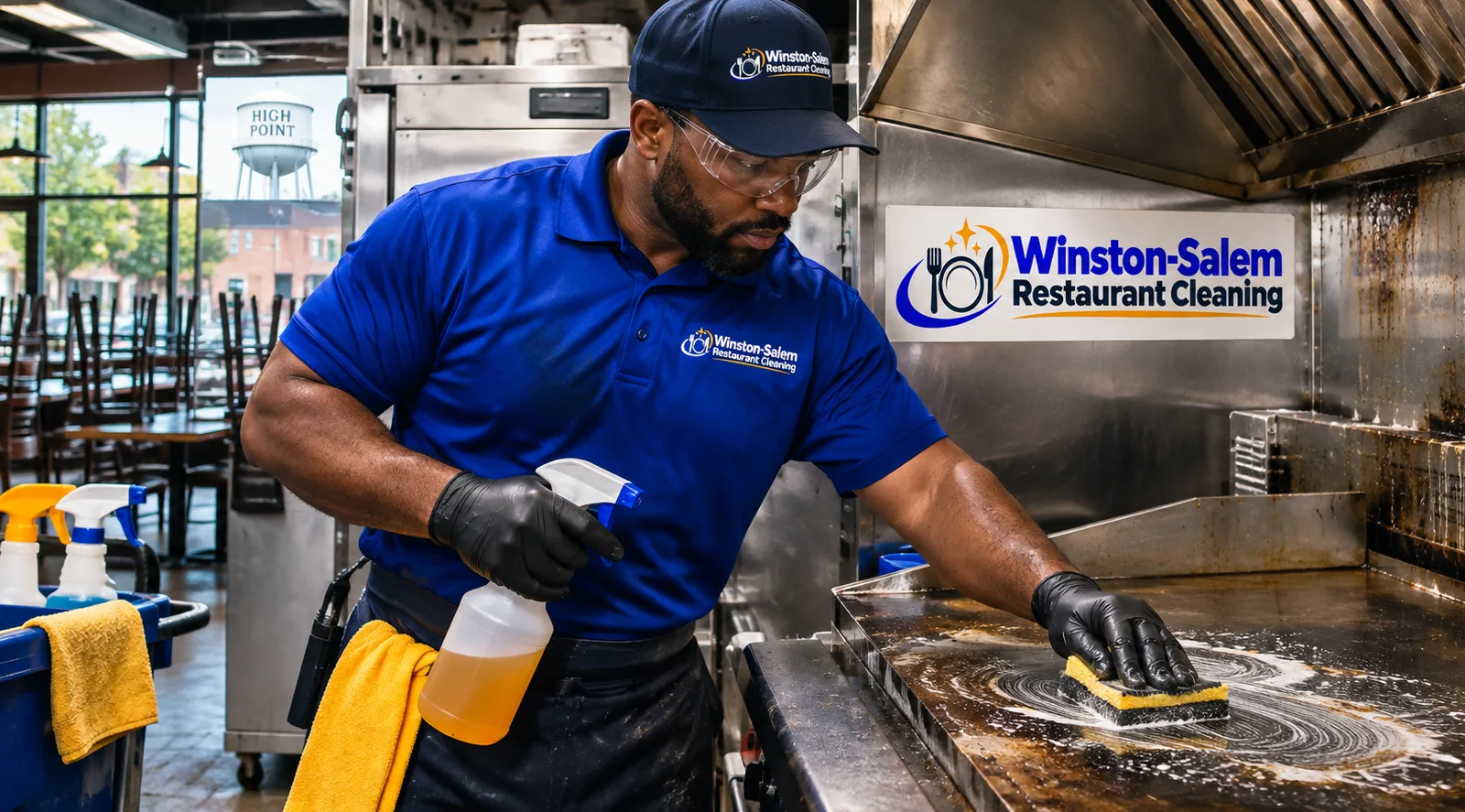
Kitchen Cleaning · High Point
Remove accumulated grease, food residue, and overhead dust with a cleaning plan built around your equipment, operating hours, and kitchen access.
✓Equipment Exteriors
✓High Dusting
✓Floors & Edges
✓Written Scope
Scope
Restaurant Kitchen Cleaning High Point businesses need often goes beyond the work completed during routine closing duties. Grease film settles on equipment sides, wall surfaces, pipes, conduit, shelving, and other areas that are difficult to reach during a normal shift. Dust can collect overhead and mix with airborne grease, leaving a sticky layer that requires the right degreaser, controlled agitation, and careful rinsing or wiping.
Winston-Salem Restaurant Cleaning provides scheduled deep cleaning and high dusting for commercial kitchens in High Point. Our restaurant specialists serving Winston-Salem also work with operators across the surrounding Triad, planning each job around the layout and access conditions at the property. Before work begins, we identify the surfaces in scope, discuss sensitive equipment, and establish which areas must be cool, cleared, covered, or disconnected by restaurant staff.
The goal is a defined scope rather than a vague promise to clean the kitchen. Managers should know whether a proposal includes equipment exteriors, floors beneath movable units, wall splatter, overhead structures, or walk-in surfaces. A written plan also distinguishes general kitchen cleaning from exhaust-system work that may require a qualified kitchen exhaust cleaning provider.
Coverage
A restaurant kitchen deep clean can address stainless steel worktables, equipment exteriors, shelving, washable wall surfaces, baseboards, doors, floor edges, and accessible spaces behind or beneath movable equipment. Heavy soil is usually treated with a surface-compatible degreaser and allowed suitable dwell time before agitation. Soil is then removed using methods appropriate for the material and the amount of water the area can safely tolerate.
Particular care is needed near electrical controls, pilot assemblies, food-contact surfaces, labels, painted finishes, and soft metals such as aluminum. Strong alkaline products can damage incompatible materials, so chemical choice matters. Food-contact surfaces must be left ready for the restaurant's required wash, rinse, and sanitizing procedure before food preparation resumes.
Cleaning scope should also account for the kitchen's workflow. A compact line with closely spaced fryers and ranges presents different access problems than a large prep kitchen with movable tables and open floor space. We review these conditions before setting the work sequence.
Work Areas
Accessible fronts, sides, legs, casters, and control-area surrounds can be degreased without flooding electrical or gas components.
Washable wall panels, tile, backsplashes, and corners are treated according to their finish and the severity of grease deposits.
The plan can include floor-wall junctions, areas beneath movable equipment, grout lines, and edges that routine mopping may miss.
Shelving, table bases, rack exteriors, doors, and accessible walk-in surfaces can be included after food and loose supplies are protected or removed.
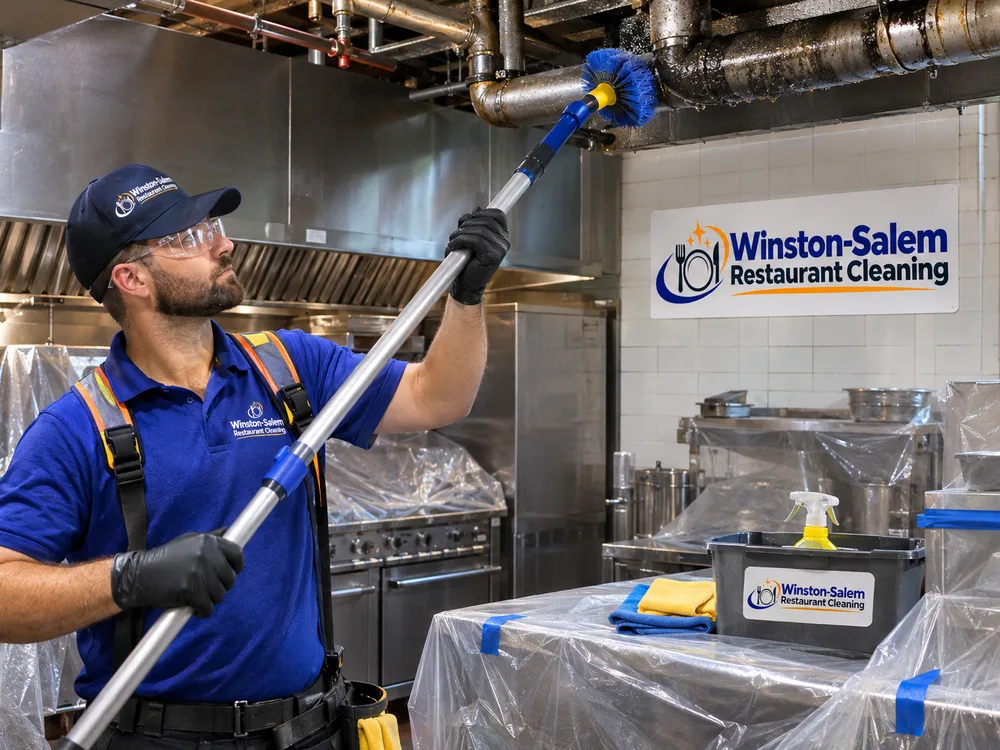
Exposed pipes, conduit, beams, vents, and other reachable structures can be dusted or degreased using controlled methods.
Handles, hinges, ledges, kick plates, casters, and equipment gaps receive focused attention when listed in the agreed scope.
High Dusting
Restaurant High Dusting High Point operators request is intended for accessible overhead surfaces that collect dust, lint, and grease-laden residue. Typical targets include exposed pipes, structural members, conduit, the tops of suspended fixtures, wall ledges, and accessible vent exteriors. The exact scope depends on ceiling height, equipment placement, surface condition, and whether a stable ladder or lift can be used safely.
Dry dusting alone is not always effective in a working kitchen. Once airborne grease has bonded dust to a surface, the deposit may need careful wet wiping or degreasing. Workers should avoid scattering loose debris onto food-contact surfaces or open equipment. Preparation can include removing exposed food, covering cleaned equipment, isolating the immediate work zone, and cleaning from higher surfaces toward lower ones.
High dusting does not replace internal duct, fan, or hood-system cleaning. Grease exhaust systems fall under NFPA 96 inspection and cleaning practices and may require a provider equipped for that specialized work. We clarify boundaries before quoting so the restaurant knows what is included.
Process
We discuss the cooking line, prep areas, overhead buildup, access limits, and any surfaces the manager wants excluded. Photos or an on-site review may be used to clarify the condition.
The written scope identifies the cleaning areas and practical responsibilities, such as cooling equipment, removing food, providing access, or arranging for equipment to be moved safely.
Before cleaning starts, exposed food and utensils must be removed or protected. Controls, electrical components, open equipment, and nearby finished surfaces are treated according to their sensitivity.
Overhead surfaces are handled before lower areas when both are included. Degreasers receive suitable dwell time, soil is agitated where needed, and residue is removed without unnecessary water spread.
We review the agreed areas with the responsible contact and identify any access limitation or condition that kept a surface from being completed as planned.
Scheduling · High Point
High Point's restaurant trade includes downtown dining near the High Point Market district, roadside locations along major commercial corridors, and kitchens serving hotels and event traffic. Access can change when the city hosts major furniture-market activity, so loading arrangements, parking, building access, and the kitchen's reopening deadline should be confirmed before the service date.
North Carolina's warm, humid periods can also make a hot kitchen uncomfortable soon after equipment shuts down. Grease is easier and safer to address when cooking appliances have cooled enough for the selected method, so shutdown timing matters. Overnight or closed-day scheduling may give the crew better access, but availability depends on the job size and the restaurant's operating calendar.
Recurring service can be useful when overhead structures, fryer-adjacent surfaces, or inaccessible floor edges soil faster than staff can address them. The right interval is based on actual buildup, cooking volume, menu, ventilation performance, and access. It should not be chosen from a generic calendar.
A clear proposal should identify the surfaces, access requirements, exclusions, and expected work window before your restaurant commits to a cleaning date.
Call for a Free QuoteFAQ
Pricing depends on kitchen size, soil level, equipment density, overhead height, access, and the exact surfaces included. A focused detail clean costs less than a full kitchen project with heavy degreasing and high dusting. Photos can help with preliminary scoping, but an on-site review may be needed when equipment gaps, elevated work, or thick buildup cannot be assessed remotely.
Yes, after-hours or closed-day work may be arranged when scheduling allows. The service window must include preparation, cleaning, residue removal, inspection, and any restaurant-required sanitizing before food preparation resumes. High Point restaurants should also confirm building access and parking restrictions, especially during major events near the downtown market district.
No, general high dusting should not be assumed to include internal hood, duct, or exhaust-fan cleaning. High dusting can cover accessible exterior pipes, beams, conduit, ledges, and vent faces. Commercial grease exhaust systems are specialized fire-safety systems addressed under NFPA 96 practices, so that work should be separately identified and assigned.
The restaurant may need to move equipment when access behind or beneath it is part of the scope. Staff should handle any gas, electrical, water, or restraint connection unless another qualified party has been arranged. Heavy or fixed units are not treated as movable merely because soil is visible behind them.
A focused cleaning may fit within one closure window, while a large kitchen with heavy grease or extensive overhead work may require a longer shift or staged visits. Equipment cooldown, preparation, ceiling height, chemical dwell time, and restricted access all affect duration. The work window should be set after the scope and current condition are reviewed.
Exposed food, clean utensils, and single-service items should be removed or fully protected before dusting or degreasing begins. Open ingredients create a contamination risk, particularly during overhead work. The restaurant remains responsible for its food-safety procedures and for completing any required washing, rinsing, and sanitizing before production restarts.
The interval should be based on visible buildup, cooking methods, operating volume, ventilation, and how much access staff have during routine closing work. Frying and high-volume cooking can soil nearby and overhead surfaces faster than light prep. A condition-based schedule is more useful than applying the same frequency to every kitchen.
Describe the kitchen, the buildup you want addressed, and your available closure window. Winston-Salem Restaurant Cleaning will help define a practical scope for deep cleaning, high dusting, or both.
Contact Us