
Cook Line and Prep Areas
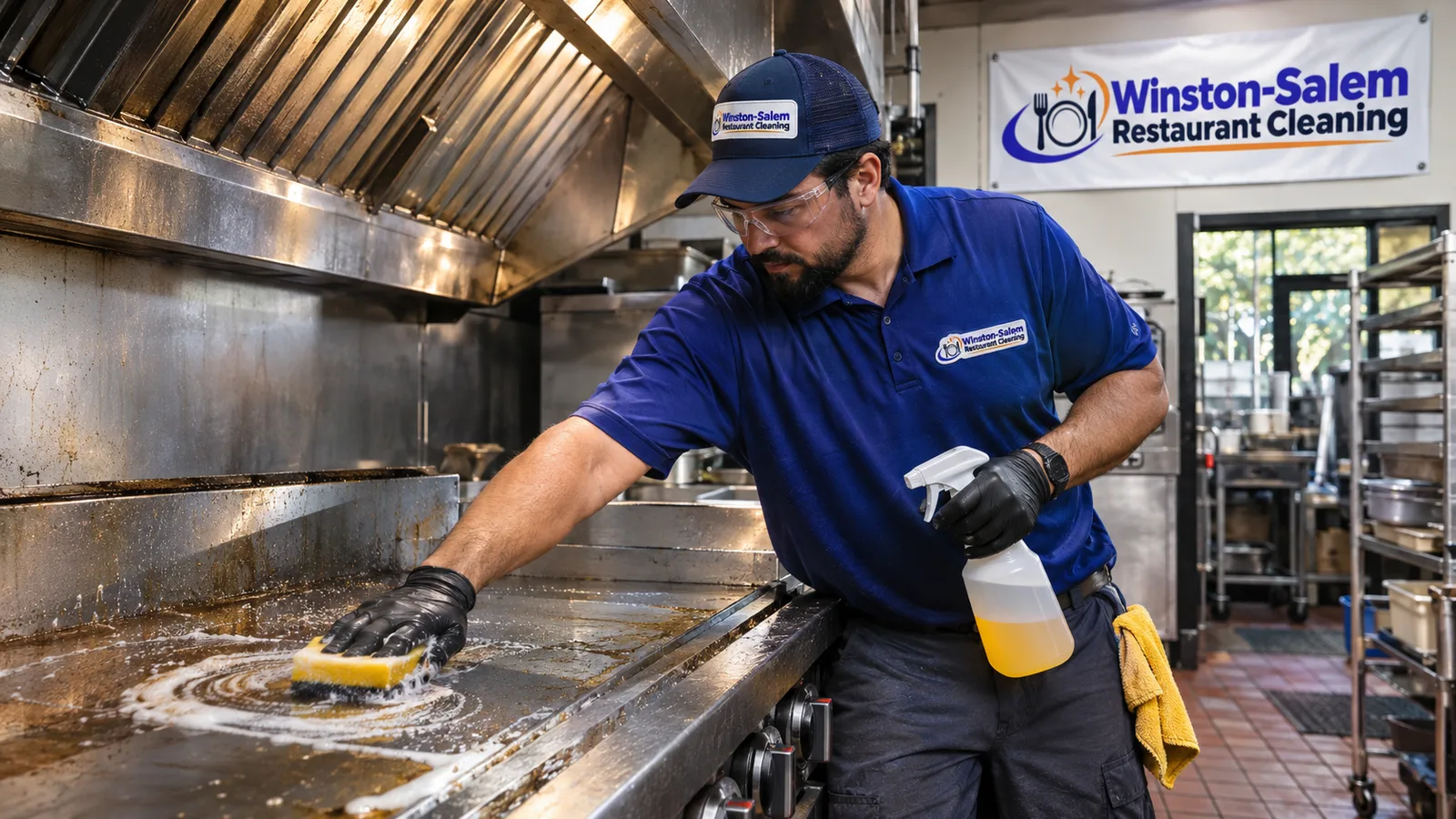
Degreasing of accessible equipment exteriors, backsplashes, prep tables, shelving, wall surfaces, and floors. Cleaning is matched to the material and the type of residue present.
Serving Winston-Salem, North Carolina & surrounding areas
Open 24/7
Restaurant Cleaning · Kernersville
Detailed commercial kitchen and dining-area cleaning built around your equipment, operating hours, and food-service workflow.
✓Cooking Lines
✓Prep Surfaces
✓Dining Areas
✓Written Scope
Scope
Restaurant Cleaning Kernersville should address the areas that affect daily operations, including cooking lines, floors, food-preparation surfaces, storage areas, dining rooms, and restrooms. Winston-Salem Restaurant Cleaning plans the work around your layout and schedule so the crew can clean thoroughly without getting in the way of prep or service.
We are a professional restaurant company in Winston-Salem, NC providing practical cleaning plans for food-service businesses in Kernersville and the surrounding Triad area. Before work begins, we discuss the space, equipment, busiest periods, problem areas, and access requirements. That information becomes a written scope with clear priorities and a schedule suited to the operation.
Kernersville sits between Winston-Salem and Greensboro, and many local restaurants serve customers moving through the Triad as well as nearby residents. Busy meal periods can leave little time for detailed cleaning. Planned after-hours or off-peak service gives grease, crumbs, spills, and residue less time to build up in difficult areas.
Equipment Care
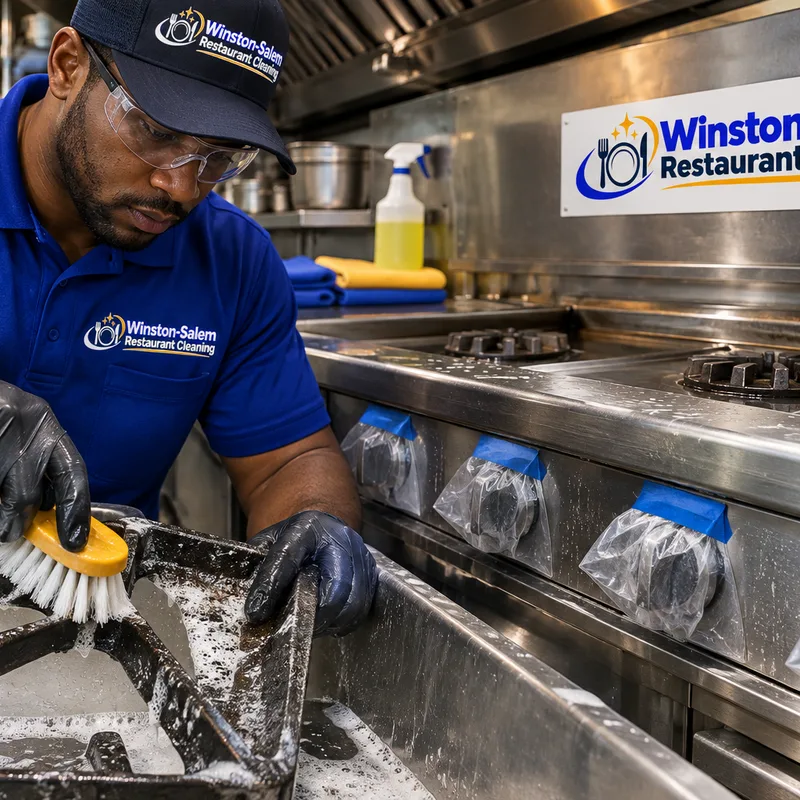
Cooking equipment needs methods that remove grease and carbon residue without damaging controls, finishes, seals, or electrical components. Restaurant Equipment Cleaning Kernersville may cover accessible surfaces on ranges, ovens, fryers, griddles, salamanders, steam tables, refrigerators, freezers, prep tables, and small appliances. The exact list is agreed upon before cleaning.
Equipment is cooled and made safe before work starts. Removable components such as racks, trays, grates, and drip pans can be cleaned separately when their construction permits it. Stainless steel is treated with suitable products and wiped with the grain. Crews avoid saturating burners, thermostats, pilot assemblies, motors, and control panels.
This work is cleaning rather than mechanical repair. If a loose seal, damaged cord, failed control, or heavy leak becomes visible, the issue should be referred to an appropriate equipment technician. Kitchen exhaust hoods, ducts, and rooftop fans also require specialized fire-safety cleaning beyond ordinary surface degreasing.
Work Areas
Degreasing of accessible equipment exteriors, backsplashes, prep tables, shelving, wall surfaces, and floors. Cleaning is matched to the material and the type of residue present.
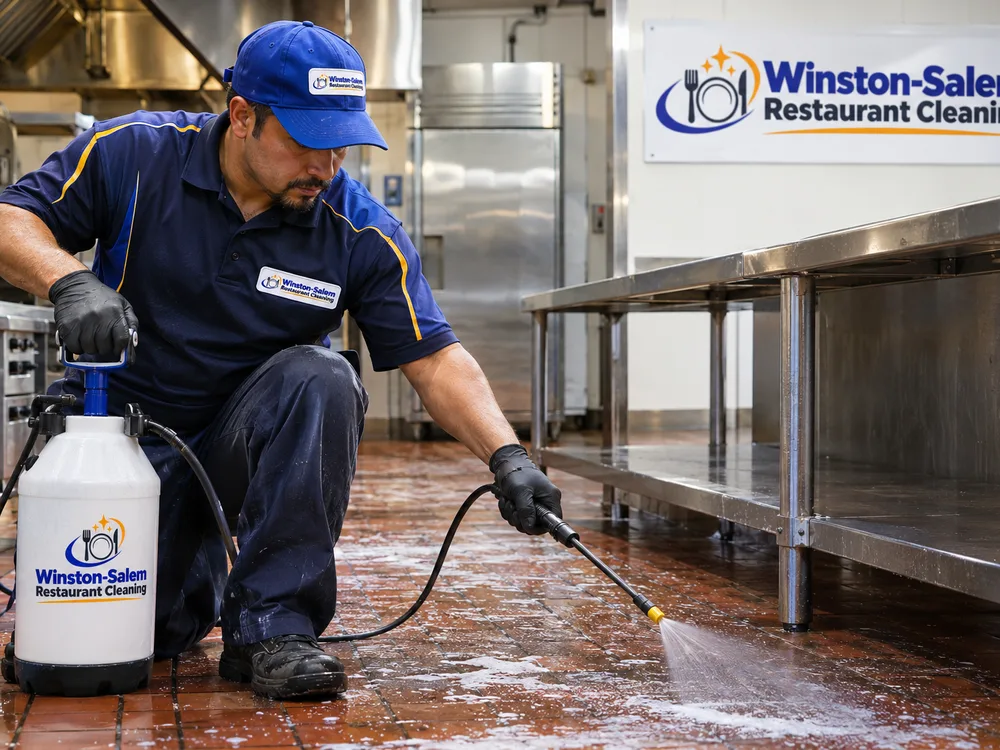
Scrubbing focuses on traffic lanes, corners, edges, under movable items, and the areas around floor mats. Grease films need proper dwell time and extraction rather than a quick pass with a mop.
Accessible refrigerator and freezer interiors, shelving, door surfaces, handles, and gaskets can be cleaned when food is removed or safely protected. Electrical parts and evaporator components are kept dry.
Tables, chairs, booths, service stations, ledges, doors, and hard floors receive attention based on customer traffic and closing routines.
Fixtures and touchpoints are cleaned and disinfected with attention to product contact times. Floors, partitions, dispensers, mirrors, and doors are included when listed in the scope.
Rotating tasks can address buildup behind movable equipment, high dust, wall splatter, shelving, and other areas that daily closing crews may not have time to reach.
Documented process
Each visit moves from a restaurant walkthrough to a defined scope, safe preparation, controlled cleaning, and a completed-scope review.
Process
We review the kitchen, dining room, storage spaces, restrooms, access points, floor materials, and equipment list. We also identify what can be moved safely and which areas must remain untouched.
The plan separates daily-style cleaning from periodic detail work. Service may be scheduled as a one-time deep clean or on a recurring basis, depending on operating hours and buildup.
Food, utensils, and exposed single-service items must be removed or protected. Equipment is shut down and cooled when required, and the crew confirms access and lockup arrangements.
Work generally moves from higher surfaces to lower ones and from lower-soil areas toward heavier grease zones. Cleaning products receive the required dwell time before residue is removed and surfaces are rinsed when directed by the label.
The agreed areas are checked before the job is closed. Any inaccessible location, damaged component, or item needing specialized service is documented for the restaurant manager.
Standards
A sound plan starts with soil type and surface compatibility. Alkaline degreasers are commonly used on suitable hard surfaces with oily residue, while neutral cleaners are a better fit for many routine floor and finish applications. Food-contact surfaces require products and procedures appropriate for those surfaces, including any label-directed rinse or sanitizing step.
Cleaning and sanitizing are separate actions. Cleaning removes food soil and grease. Sanitizing follows on a cleaned surface using the correct concentration and contact time. Disinfectants used in restrooms and other non-food-contact areas also need their full label contact time. Mixing chemicals can create dangerous reactions, so products remain in labeled containers and are used according to manufacturer directions.
North Carolina food establishments are regulated under state and local public-health requirements. A professional service can support routine sanitation, but restaurant management remains responsible for food handling, employee practices, temperature control, pest management, and regulatory compliance.
Scheduling · Kernersville
Every restaurant has a different pressure point. A compact kitchen may need careful sequencing because there is little room to move equipment. A larger dining operation may need separate work zones so the crew can finish the kitchen, guest areas, and restrooms efficiently. Drive-through and takeout operations often need added attention around beverage stations, pickup counters, door handles, and other frequently touched areas.
Frequency depends on cooking volume, menu, ventilation, staffing, and the restaurant's own closing procedures. Frying and high-heat cooking can produce persistent grease films. Flour, sugar, and dry ingredients collect along equipment legs and shelving. North Carolina's warm, humid periods can also make prompt spill cleanup and moisture control especially important. Cleaning should never leave standing water around equipment, floor transitions, or storage areas.
A practical recurring plan assigns high-use areas to each visit and rotates deeper tasks at appropriate intervals. This keeps the scope realistic and prevents periodic details from being forgotten. Managers also have a clear record of what the outside crew handles and what remains part of the restaurant's daily close.
Tell us about your equipment, operating hours, and problem areas to receive a cleaning scope built for the way your restaurant works.
Call for a Free QuoteFAQ
Restaurant cleaning is usually priced after a walkthrough because kitchen size, grease level, equipment count, access, and frequency can change the labor required. A recurring visit focused on selected areas costs less than a full initial deep clean involving the cook line, floors, dining room, and restrooms. Winston-Salem Restaurant Cleaning confirms the exact scope and price after reviewing the Kernersville property.
Yes, service can often be arranged during closed or off-peak hours when access and lockup details are agreed upon in advance. Equipment that will be cleaned must have enough time to cool, and food, utensils, and exposed supplies need to be removed or protected before the crew starts.
A deep clean may take several hours or require staged work across more than one service period, depending on the kitchen's size and condition. Heavy grease, tightly spaced equipment, limited access, and a long equipment list add time. A walkthrough provides a more reliable duration than an estimate based only on square footage.
Movable equipment can be repositioned when it is safe, disconnected correctly, and included in the approved scope. Gas-connected, hardwired, plumbed, very heavy, or unstable units should not be moved casually. The walkthrough identifies which items the cleaning crew can access and which require a qualified technician or restaurant representative.
No, routine equipment cleaning does not include mechanical repair or complete exhaust-system cleaning. Accessible equipment surfaces and removable components may be cleaned, but motors, controls, gas components, ducts, and rooftop exhaust fans need appropriately qualified specialists. These boundaries are recorded in the scope before work starts.
Cold-storage cleaning requires food to be removed, securely covered, or relocated according to an agreed plan. The restaurant remains responsible for safe holding temperatures and food protection. Shelves and interior surfaces can then be cleaned without exposing ingredients or packaging to chemicals and dirty rinse water.
The right frequency depends on cooking methods, customer volume, staffing, and the strength of the restaurant's daily cleaning routine. High-grease cook lines may need professional attention more often than low-volume preparation spaces. After the first service, the schedule can be adjusted based on actual buildup rather than a generic interval.
Share the size of your space, the equipment that needs attention, and your preferred service window. We will outline the work, explain any access requirements, and prepare a clear cleaning plan.
Contact Us