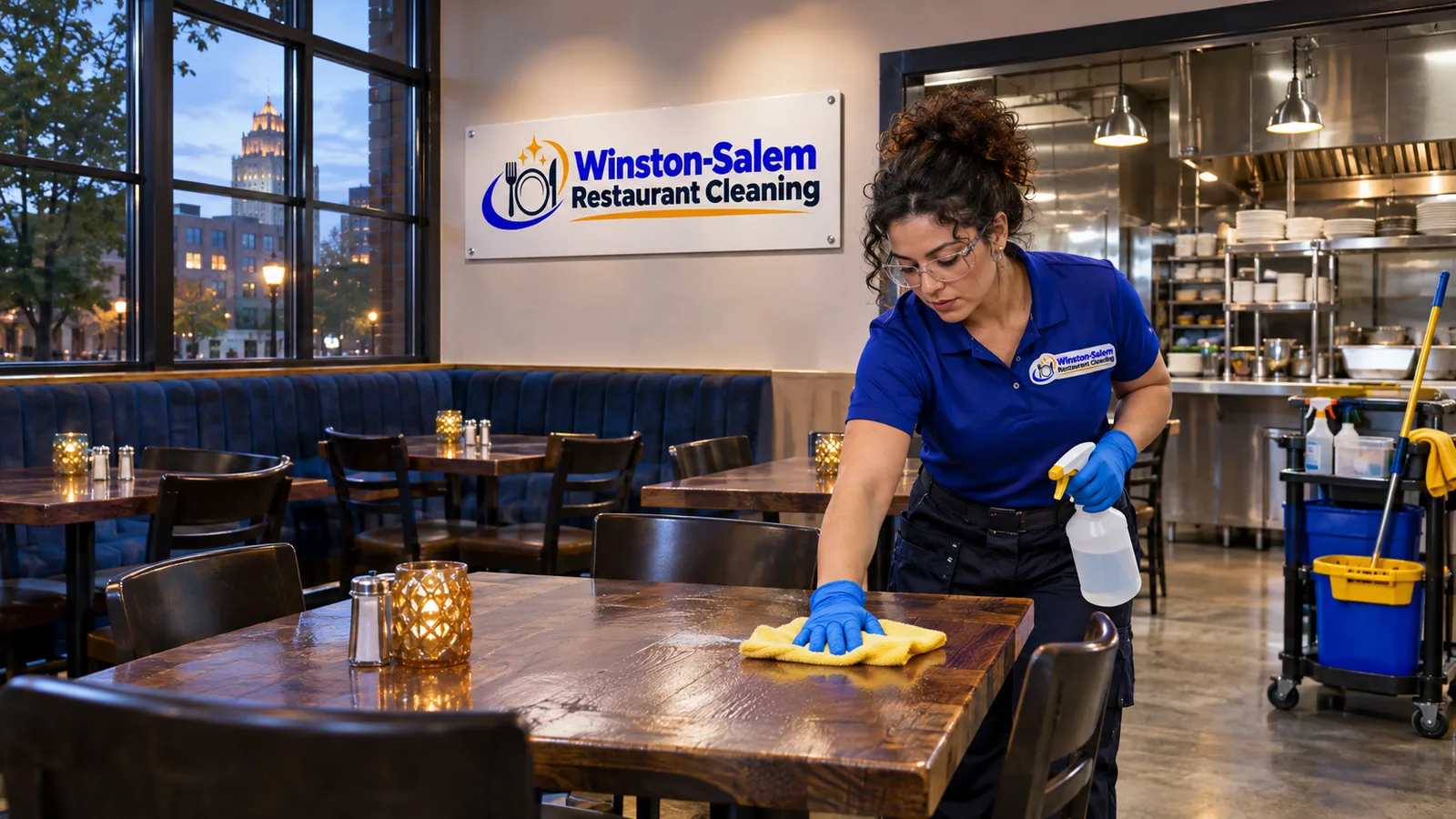
A professional cleaner sanitizing a Greensboro restaurant dining area after closing, with clean tables and a commercial kitchen in the background.

Restaurant Cleaning · Greensboro

Restaurant Cleaning Greensboro

A practical cleaning plan for kitchens, dining rooms, restrooms, and customer-facing areas, scheduled around your operating hours.

✓Kitchens

✓Dining Rooms

✓Restrooms

✓Written Scope

Scope

Restaurant Cleaning Greensboro Businesses Can Schedule Around Service

Restaurant Cleaning Greensboro requires more than a quick pass over the floors. Grease settles on equipment exteriors and nearby surfaces. Food debris collects beneath prep tables, mats, and dining furniture. Restrooms need close attention throughout the week, while glass, doors, and entry areas shape a guest's first impression.

Winston-Salem Restaurant Cleaning creates written scopes based on the rooms, surfaces, traffic, and operating schedule at each property. For every property, Winston-Salem's trusted restaurant team coordinates the work around opening, closing, deliveries, and food preparation rather than expecting the restaurant to adapt to a generic cleaning routine. Our office is based on Sunnyside Avenue in Winston-Salem, and we serve restaurant operators in Greensboro with planned commercial cleaning.

A walkthrough identifies the areas included, their current condition, and the frequency they need. The resulting checklist can separate nightly duties from weekly detail work and periodic deep cleaning. Managers know which tasks belong to the cleaning crew and which remain with restaurant staff.

Request a Callback

Operations

A Scope Built for the Way Your Restaurant Operates

A counter-service restaurant does not collect soil in the same places as a full-service dining room. Open kitchens place more emphasis on visible equipment exteriors and floors. Bars need careful work around rails, stools, splash zones, and sticky floor edges. High-volume dining rooms may require more frequent attention at entrances, beneath booths, and along server routes.

Greensboro also has distinct operating patterns. Restaurants near downtown entertainment venues may need cleaning after late service and event traffic. Businesses near UNC Greensboro often deal with concentrated meal periods and frequent customer turnover. Properties around Friendly Center generally place strong emphasis on polished entrances, glass, dining areas, and restrooms because guests encounter those spaces before ordering. Along Gate City Boulevard, cleaning windows may need to fit around varying closing times, delivery activity, and drive-through operations.

These conditions affect timing and task frequency. They should be discussed during the walkthrough instead of assumed after service begins.

Request a Callback
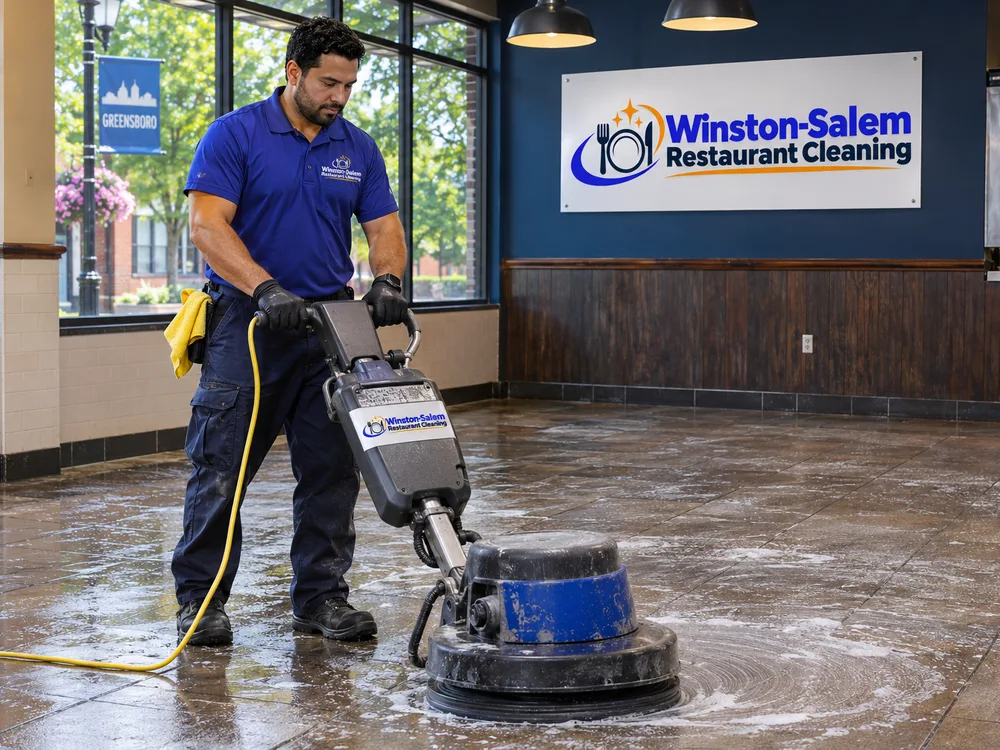
A cleaning professional using a commercial floor machine in an empty Greensboro restaurant dining room after furniture has been moved for edge-to-edge access.
Floor care planned for material, soil and reopening time

Work Areas

What a Restaurant Cleaning Plan Can Cover

Commercial Kitchen Areas

Cleaning can include floors, wall splash zones, equipment exteriors, prep-table exteriors, shelving exteriors, handles, kick plates, and accessible surfaces. Work near food-contact surfaces should follow the restaurant's chemical and reopening procedures.

Dining Rooms

Crews can clean table bases, chairs, booths, partitions, ledges, windowsills, floors, and other guest-facing surfaces. Moving light furniture where practical gives better access to crumbs and soil along edges.

Entrances and Waiting Areas

Door glass, frames, handles, host areas, mats, and entrance floors collect fingerprints and tracked-in grit. Regular attention keeps these first-contact areas orderly during busy service periods.

Bars and Beverage Stations

A written scope can address exterior surfaces, cabinet fronts, floor edges, splash marks, foot rails, and accessible areas around fixed equipment without interfering with beverage lines or stocked products.

Employee and Support Spaces

Break areas, offices, corridors, storage-area floors, and employee restrooms can be included when access and responsibilities are established before work begins.

Scheduled Detail Cleaning

Periodic work can target baseboards, high-touch points, chair legs, floor edges, low ledges, washable walls, and other areas that do not need the same frequency as routine cleaning.

Restroom-specific workflow

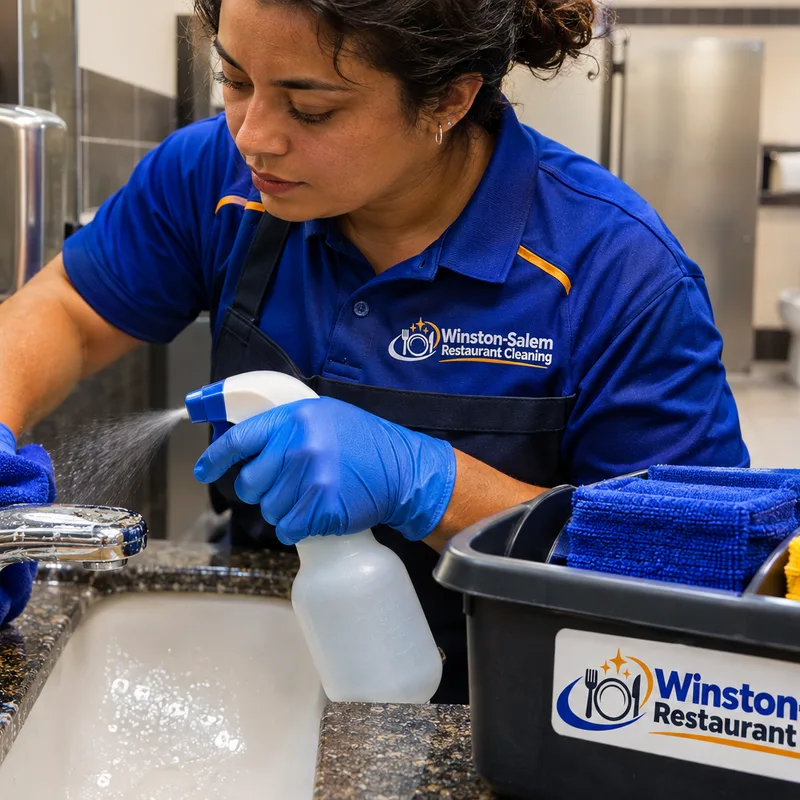
Separate tools, a fixture-by-fixture checklist, and attention to odor sources help keep restaurant restrooms ready for guests.

A cleaner wearing gloves disinfecting a restaurant restroom sink and faucet using color-coded microfiber supplies kept separate from kitchen tools.
Restroom tools remain separate from food-area equipment

Restrooms

Restaurant Bathroom Cleaning Greensboro Guests Notice

Restaurant Bathroom Cleaning Greensboro should use a restroom-specific checklist rather than treating the room as an extension of dining-room cleaning. A typical visit can cover toilets and urinals, sinks, counters, mirrors, partitions, dispensers, doors, handles, floors, and reachable touchpoints. Supplies can be restocked when the restaurant provides them and includes that task in the scope.

The cleaning sequence matters. Crews should remove loose debris, apply products with the required label dwell time, clean from less soiled surfaces toward more soiled fixtures, and use restroom-designated cloths and tools. Color-coded microfiber and separate mop equipment reduce the chance of carrying restroom soil into dining or kitchen areas.

Odor complaints are often caused by residue around fixture bases, partitions, floor edges, drains, or grout rather than the room's open floor alone. Detail work should address those sources. Recurring leaks, damaged caulk, or failed fixtures are maintenance issues, so the manager should be told when cleaning cannot correct the underlying condition.

Request a Callback

Standards

Food-Area Cleaning Requires the Right Products and Procedures

Cleaning removes grease, crumbs, and other soil. Sanitizing reduces microorganisms on a cleaned surface when the correct product, concentration, and contact time are used. Disinfecting is a separate process intended for suitable surfaces and must follow the product label. These terms are not interchangeable.

In food preparation areas, product selection must match the surface and the restaurant's food-safety procedures. Sanitizer concentration can be checked with the test strips specified for that chemistry. Food, utensils, single-service items, and exposed ingredients must be protected before nearby cleaning begins. A product should never be mixed with another chemical unless its manufacturer expressly directs it.

Commercial kitchens also contain materials that need different treatment. Stainless steel can show streaks or suffer damage from unsuitable chemicals. Quarry tile and grout collect greasy soil differently than luxury vinyl tile in a dining room. Rubber mats need cleaning on both sides and a safe place to dry. Grease on a floor may require an appropriate degreaser, controlled dilution, agitation, recovery of the dirty solution, and enough drying time before employees return.

Routine janitorial cleaning does not replace hood and exhaust-system service, grease-trap pumping, pest control, equipment repair, or fire-suppression inspection. The written scope should state these boundaries clearly. Restaurants remain responsible for meeting requirements set by the Guilford County health authorities and the North Carolina Food Code.

Request a Callback

Process

How Recurring Restaurant Cleaning Starts

  1. Step 01

    Walk Through the Property

    A walkthrough covers the kitchen, dining room, restrooms, bar, entrance, support spaces, flooring, access points, and current problem areas. Managers can identify locked rooms, alarm procedures, and tasks reserved for employees.

  2. Step 02

    Define Tasks and Frequency

    The scope separates work needed after each scheduled visit from weekly or periodic detail cleaning. It also records excluded equipment, approved products, supply responsibilities, and any surfaces requiring special care.

  3. Step 03

    Set Access and Timing

    The schedule accounts for closing duties, staff departure, deliveries, overnight security, and the time floors need to dry. The crew should know who can authorize extra work or respond to an access problem.

  4. Step 04

    Complete and Document the Work

    Crews follow the agreed checklist and report maintenance concerns or inaccessible areas. Documentation may include task signoff, manager notes, or issue reporting, depending on the restaurant's operating needs.

  5. Step 05

    Review the Plan

    The manager and cleaning team can adjust frequency when business volume, seasonal traffic, operating hours, or the condition of a particular area changes. Reviews keep the scope tied to actual use.

Request a Callback

Hiring Standards

What to Confirm Before Hiring a Restaurant Cleaner

A Room-by-Room Scope

The proposal should identify surfaces, tasks, visit frequency, exclusions, and responsibility for consumables. Broad promises are difficult for managers and crews to interpret consistently.

Scheduling That Fits Operations

Confirm arrival windows, access arrangements, expected completion time, and how schedule changes are handled. Cleaning should leave enough time for floors and treated surfaces to dry before staff return.

Cross-Contamination Controls

Ask how tools are separated between restrooms, dining rooms, and food-related areas. Color coding and dedicated equipment provide a practical way to keep those workflows apart.

Chemical Handling

Products should be labeled, diluted according to manufacturer directions, and used for their intended surface. Safety Data Sheets should be available to workers who handle commercial cleaning chemicals.

Quality Follow-Up

Establish how missed tasks, access problems, spills, breakage, and maintenance concerns are reported. A clear communication path helps the restaurant resolve an issue before the next service.

Get a written cleaning scope based on your restaurant's rooms, operating hours, floor materials, and service volume before recurring work begins.

Call for a Free Quote

FAQ

Questions About Restaurant Cleaning in Greensboro

How much does restaurant cleaning cost in Greensboro?+

Restaurant cleaning is usually priced after a walkthrough because square footage alone does not show the labor required. Cost depends on visit frequency, kitchen grease levels, restroom count, flooring, furniture movement, access, closing time, and whether the restaurant needs routine service or an initial deep clean. A written quote should identify included tasks and the frequency assigned to each area.

Can cleaning be scheduled after the restaurant closes?+

Yes, after-hours cleaning can be planned when the restaurant provides an appropriate access and security process. The schedule should account for employee closing duties, late customers, deliveries, alarms, and drying time. Restaurants near downtown Greensboro venues may also need a plan that can accommodate event-related closing changes.

How often should a Greensboro restaurant be professionally cleaned?+

The right frequency depends on traffic, menu, hours, flooring, and what employees already clean during service. Kitchens and restrooms generally need more frequent attention than periodic detail areas such as baseboards or low ledges. A useful scope assigns frequency by task instead of placing every surface on one schedule.

Is restaurant bathroom cleaning included?+

Bathroom cleaning can be included when it is listed in the written scope. Confirm the fixtures, partitions, mirrors, floors, touchpoints, dispensers, supply restocking, and odor-source detail work covered during each visit. Restroom cloths and tools should stay separate from those used in kitchens and dining rooms.

Do restaurant cleaners sanitize food-contact surfaces?+

Food-contact surface sanitizing can be included only with agreed procedures, suitable products, and clear responsibility for protecting food and utensils. The surface must first be cleaned, and the sanitizer must be used at its labeled concentration and contact time. The restaurant should confirm that the process fits its food-safety plan and North Carolina Food Code obligations.

Does routine restaurant cleaning include hood or exhaust-system cleaning?+

Routine janitorial cleaning usually does not include internal hood, duct, fan, or fire-suppression work. Those systems require specialized service and should be identified as exclusions unless a qualified provider is specifically contracted. Accessible hood exteriors may be handled separately if the scope and safe method are agreed upon.

Can you provide a one-time deep clean before opening or after renovation?+

One-time deep cleaning can be scoped for a new opening, management change, reopening, or post-construction condition. These projects need a walkthrough because adhesive residue, construction dust, heavy grease, high surfaces, and floor restoration require different tools and labor. The restaurant should allow enough time for cleaning, inspection, corrections, and surface drying before food preparation begins.

Plan Reliable Cleaning for Your Greensboro Restaurant

Tell us about your operating hours, customer areas, kitchen, restrooms, and current trouble spots. We will help define a practical scope and schedule for the property.

Contact Us

Request Your Cleaning Quote