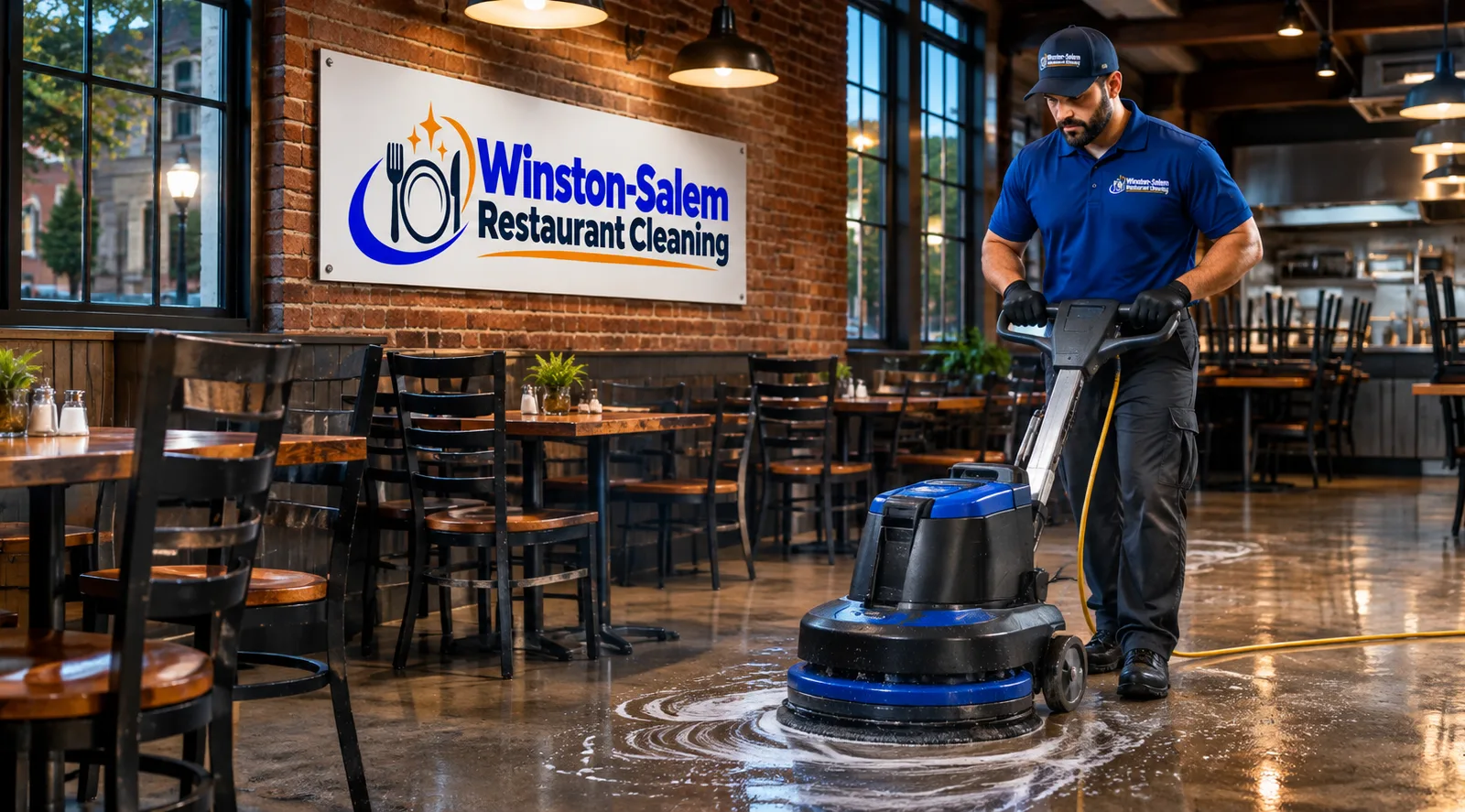
A professional cleaner using commercial equipment on the floor of a clean Thomasville restaurant dining room after closing.

Restaurant Cleaning · Thomasville

Restaurant Cleaning Services Thomasville

Dependable cleaning plans for commercial kitchens, dining rooms, restrooms, and floors, scheduled around your hours and operating needs.

✓Kitchens

✓Dining Areas

✓Restrooms & Floors

✓Written Scope

Scope

Reliable Restaurant Cleaning Built Around Your Operation

Restaurant Cleaning Services Thomasville should support a cleaner workplace without disrupting prep, service, or closing duties. Winston-Salem Restaurant Cleaning creates practical scopes for independent restaurants, cafés, quick-service locations, bars, and multi-unit operators in Thomasville. The work may be scheduled after closing, before opening, or during another agreed period when staff and guests are out of the way.

Your plan begins with the areas that need attention, the soil each surface collects, and the cleaning frequency your operation can support. A dining room may need nightly floor care and regular detail work, while a busy cook line often requires more frequent degreasing of accessible surfaces. Restrooms, entry glass, baseboards, and high-touch points can be assigned clear tasks instead of being left to a vague general-cleaning checklist.

Although the company is based at 2101 Sunnyside Ave, Suite 4 in Winston-Salem, our crew serves Thomasville as an experienced restaurant team in Winston-Salem with a defined scope, practical scheduling, and direct communication. Before recurring work starts, we discuss access, alarms, surface restrictions, equipment placement, and the condition expected at the end of each visit.

Request a Callback

Coverage

What Restaurant Cleaning Services Thomasville Can Cover

Commercial Kitchen Surfaces

Cleaning can include accessible cook-line exteriors, prep tables, sinks, shelving, walls, washable splash areas, and floors. Products and dwell times are selected for the soil and surface, with food-contact areas handled according to the agreed procedure.

Dining Rooms and Guest Areas

Tables, chairs, booths, ledges, partitions, entry glass, and other guest-facing surfaces receive routine cleaning. The scope can also include spot attention for fingerprints, crumbs, spills, and buildup around furniture edges.

Floor Care

Vacuuming, damp mopping, machine scrubbing, and detail cleaning along edges may be used where appropriate. Treatment depends on whether the restaurant has tile, resilient flooring, sealed concrete, carpet, or a combination.

Restrooms

Fixtures, partitions, mirrors, dispensers, touchpoints, and floors are cleaned on a set checklist. Restocking can be included when the restaurant supplies compatible paper products, soap, liners, and other consumables.

Periodic Detail Cleaning

Scheduled detail work addresses baseboards, corners, lower walls, furniture legs, reachable vents, and other areas that fall outside a basic nightly routine. These tasks can rotate instead of extending every service visit.

Waste and Closing Support

Bagged waste removal, liner replacement, and cleaning around interior waste stations can be assigned to the crew. Handling procedures and disposal points are confirmed before service begins.

Operations

Restaurant Cleaning Thomasville Managers Can Verify

A dependable cleaning plan identifies what gets cleaned, how often it gets cleaned, and which party supplies consumables. That written scope gives managers a useful way to review completed work and report a missed task. It also keeps occasional detail cleaning separate from recurring duties, which helps avoid confusion during short overnight service windows.

Commercial restaurant cleaning requires more than applying one product throughout the building. Degreasers are suited to oily kitchen soils but may be inappropriate for certain finished or sensitive surfaces. Disinfectants require label-compliant dilution and contact time. Color-coded cloths and tools can help separate restroom work from kitchen and dining tasks, while clean-to-dirty workflow reduces the chance of moving soil back onto completed surfaces.

Thomasville restaurants near Main Street may need service planned around customer traffic, deliveries, and limited access during operating hours. Locations near Interstate 85 may have later closing schedules or heavier tracked-in soil because of regular vehicle traffic. In North Carolina's humid months, entrances and kitchen floors can also stay damp longer, so crews must use wet-floor controls and avoid leaving excess solution behind.

Request a Callback
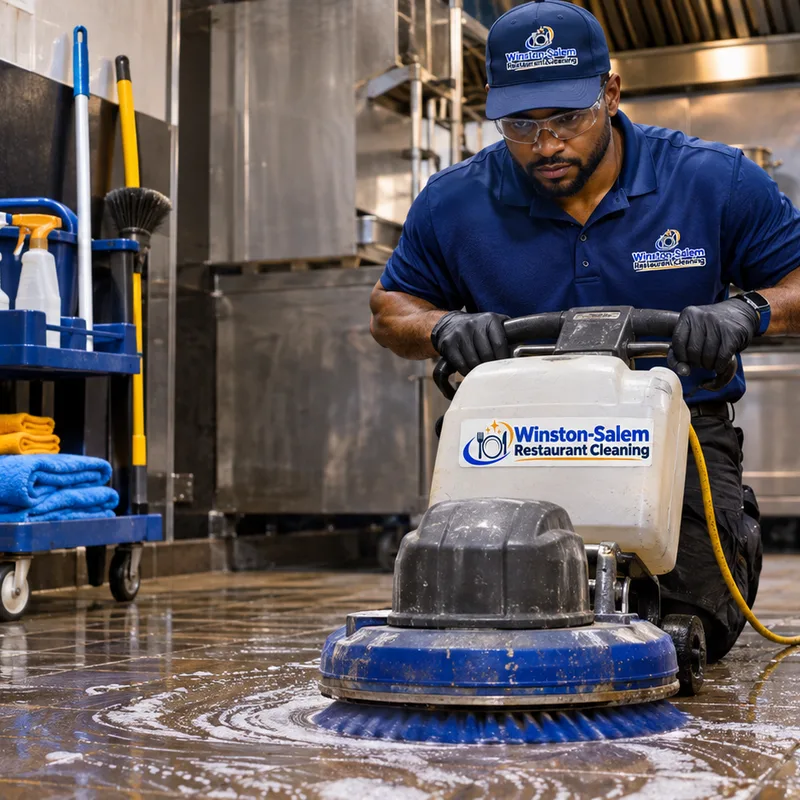
A restaurant cleaner machine-scrubbing a commercial kitchen floor with warning signage and cleaning tools organized away from food-preparation surfaces.
Equipment and chemistry should match the floor, soil, and operating environment.

Process

How a Recurring Cleaning Plan Is Set Up

  1. Step 01

    Walk Through the Restaurant

    We review the kitchen, dining room, restrooms, entrances, storage access, and waste route. This is also the time to identify delicate finishes, restricted areas, security procedures, and tasks already handled by restaurant staff.

  2. Step 02

    Define Tasks and Frequencies

    Each task is assigned a frequency such as every visit, weekly, or periodically. The scope states whether work includes routine surface cleaning, floor care, interior glass, restrooms, consumable restocking, or scheduled detail cleaning.

  3. Step 03

    Confirm Access and Timing

    The schedule accounts for closing duties, opening crews, deliveries, alarm codes, keys, and equipment shutdown requirements. Any areas that must remain available to restaurant employees are identified before the first visit.

  4. Step 04

    Complete the Initial Service

    The first cleaning establishes the working routine and may take longer when buildup needs attention. Tasks outside the recurring scope are documented so managers can decide whether to add periodic service.

  5. Step 05

    Review and Adjust

    Feedback is tied to the checklist and corrected through a clear point of contact. Frequencies can be adjusted when seasonal traffic, menu changes, special events, or operating hours change the restaurant's cleaning needs.

Request a Callback
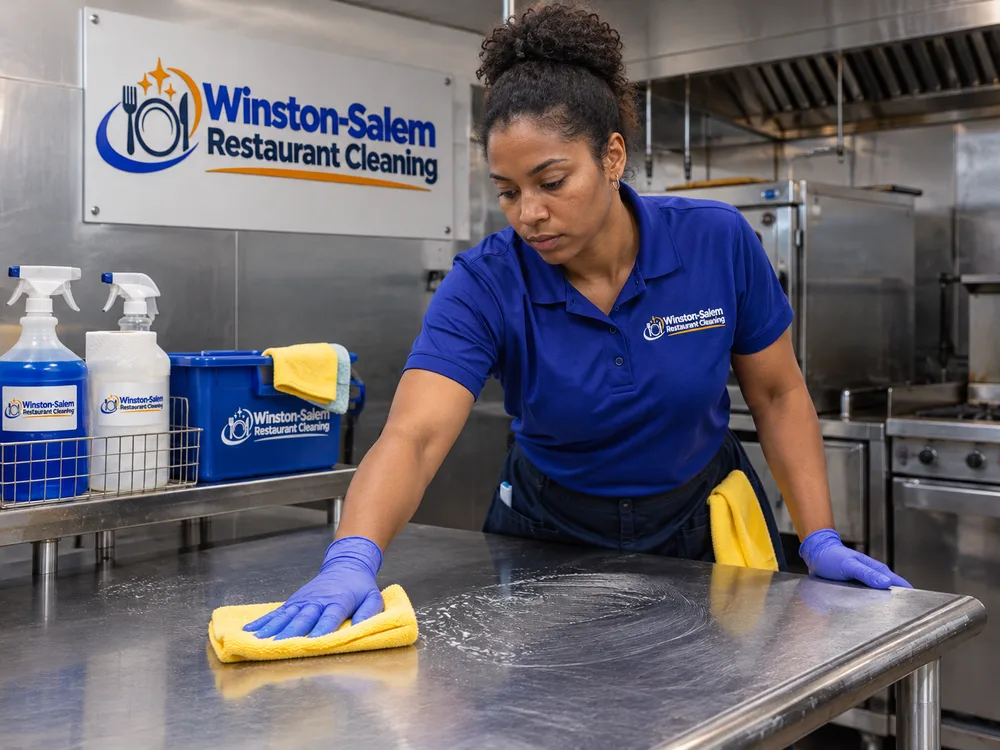
A trained cleaner wiping an accessible stainless-steel prep surface in an empty commercial kitchen, with labeled supplies kept separate from food and utensils.
Controlled tools and clearly defined work areas

Standards

Kitchen Cleaning With Clear Boundaries

Routine commercial kitchen cleaning commonly covers accessible exterior surfaces and floors. It should not be confused with every specialized maintenance task in a restaurant. Cleaning inside active cooking equipment, dismantling machinery, handling hazardous materials, servicing suppression systems, or cleaning inaccessible exhaust ductwork may require separate procedures or qualified specialists. The proposed scope should say exactly what is included.

Food-contact surfaces require particular care. Cleaning removes food residue and grease; sanitizing is a separate step performed after cleaning with a product suitable for the surface and task. Products must be used according to their labels, including dilution, dwell time, rinsing instructions, and ventilation requirements. Restaurant management should also identify manufacturer restrictions for stone, wood, coated metal, specialty flooring, or other sensitive materials.

A professional crew coordinates its work with the restaurant's own food-safety program rather than replacing management responsibilities. Employees still need to follow the operation's procedures for food storage, equipment shutdown, temperature control, and end-of-shift sanitation. A clear division of duties keeps essential work assigned and makes the cleaning service easier to inspect.

Request a Callback

Service Area · Thomasville

A Practical Fit for Thomasville Restaurants

Restaurant types differ, and their cleaning plans should differ too. A small café with an early closing time may need a compact visit focused on floors, restrooms, and guest areas. A full-service restaurant may need longer access after the kitchen closes, especially when dining-room cleaning must wait for servers to finish side work. Quick-service locations often benefit from tightly defined, repeatable checklists because counters, entry points, and restrooms receive frequent use.

Thomasville is part of Davidson County and is connected to the larger Triad market by Interstate 85. For local operators, that can mean schedules shaped by commuters, travelers, weekend demand, and deliveries. A cleaning plan should leave enough time between final restaurant duties and the arrival of the opening crew. Shared retail spaces may also have landlord rules for waste routes, parking, keys, or after-hours entry.

Winston-Salem Restaurant Cleaning keeps the conversation focused on the building you operate. We review what your employees already clean, where recurring trouble spots appear, and what level of presentation guests should find at opening. The result is a scope based on actual tasks rather than a generic package.

Request a Callback

Pricing

How Much Does Restaurant Cleaning Cost in Thomasville?

Recurring restaurant cleaning in Thomasville typically costs about $300 to $1,500 or more per month, while larger kitchens, frequent service, or intensive floor care can raise the total. A limited weekly visit generally costs less than nightly cleaning across a kitchen, dining room, and restrooms.

Price changes with square footage, visit frequency, operating hours, grease buildup, floor type, access, consumables, and periodic detail tasks. Specialized equipment or an initial deep clean may be priced separately. Your exact cost is confirmed after a walkthrough and written scope.

Request a Callback

A walkthrough gives you a task list, recommended frequency, and realistic schedule based on how your restaurant operates.

Call for a Free Quote

FAQ

Questions About Restaurant Cleaning in Thomasville

Can restaurant cleaning be scheduled after we close?+

Yes, restaurant cleaning can usually be scheduled after closing or during another agreed low-traffic period. The final window depends on when kitchen and dining staff finish, when the opening crew arrives, and whether a Thomasville location has shared-building access rules. We confirm keys, alarms, entry procedures, and lockup responsibilities before service starts.

How often should a Thomasville restaurant be professionally cleaned?+

The right frequency depends on traffic, menu, hours, floor type, and the work handled by your employees. High-use restrooms and kitchen floors may need attention each service day, while baseboards, lower walls, and other detail tasks can rotate weekly or periodically. A walkthrough helps assign each task a sensible frequency.

Do you clean restaurant kitchens as well as dining areas?+

Yes, a scope can include accessible commercial kitchen surfaces, dining areas, restrooms, entrances, and floors. The written proposal identifies exclusions, particularly inside equipment, inaccessible exhaust components, hazardous cleanup, or work requiring specialist licensing. That distinction helps managers compare proposals accurately.

Will cleaning interfere with food preparation or opening duties?+

The schedule is designed to keep cleaning separate from active food preparation whenever practical. Chemicals, tools, wet-floor controls, and drying time must be considered before employees return to an area. For restaurants near Thomasville's Main Street or the Interstate 85 corridor, timing can also account for customer patterns, deliveries, and late closing hours.

Are cleaning products supplied by the crew?+

Cleaning chemicals and equipment can be included when stated in the service agreement, while the restaurant may supply consumables such as paper products, soap, or liners. Product choices depend on the surface, soil, label directions, and any manufacturer restrictions. These responsibilities are confirmed in writing before the first visit.

Can you clean before an inspection or special event?+

A focused cleaning can be scheduled when availability allows, but cleaning cannot guarantee an inspection outcome. The scope can prioritize floors, restrooms, guest-facing areas, accessible kitchen surfaces, and accumulated detail work. Restaurant management remains responsible for food handling, equipment condition, records, pest control, and other regulatory duties.

What affects the price of Restaurant Cleaning Services Thomasville?+

The main cost factors are restaurant size, cleaning frequency, condition, task list, access window, floor-care method, and the amount of grease or detail work involved. A compact dining-room service differs greatly from nightly work across a full commercial kitchen and multiple restrooms. A walkthrough produces a more useful price than square footage alone.

Set Up a Cleaner, More Consistent Restaurant

Tell Winston-Salem Restaurant Cleaning about your Thomasville location, operating hours, and problem areas. We will discuss a workable schedule and define the tasks before recurring service begins.

Contact Us

Request Your Cleaning Quote